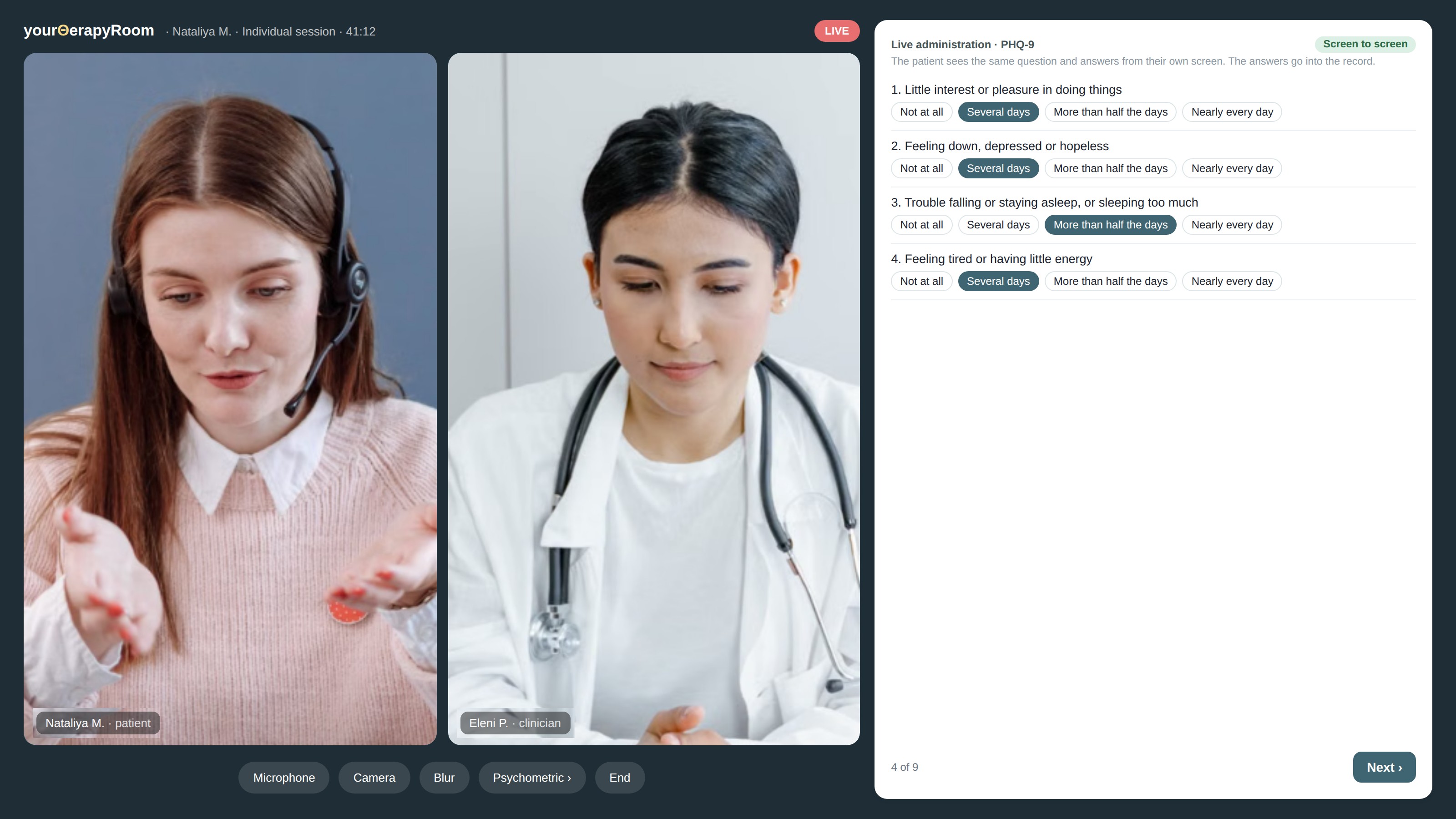
[1] The names, contact details and clinical data shown in the screenshots on this website are invented solely for demonstration and correspond to no real person, patient or case. Any resemblance to actual persons, living or dead, is entirely coincidental.
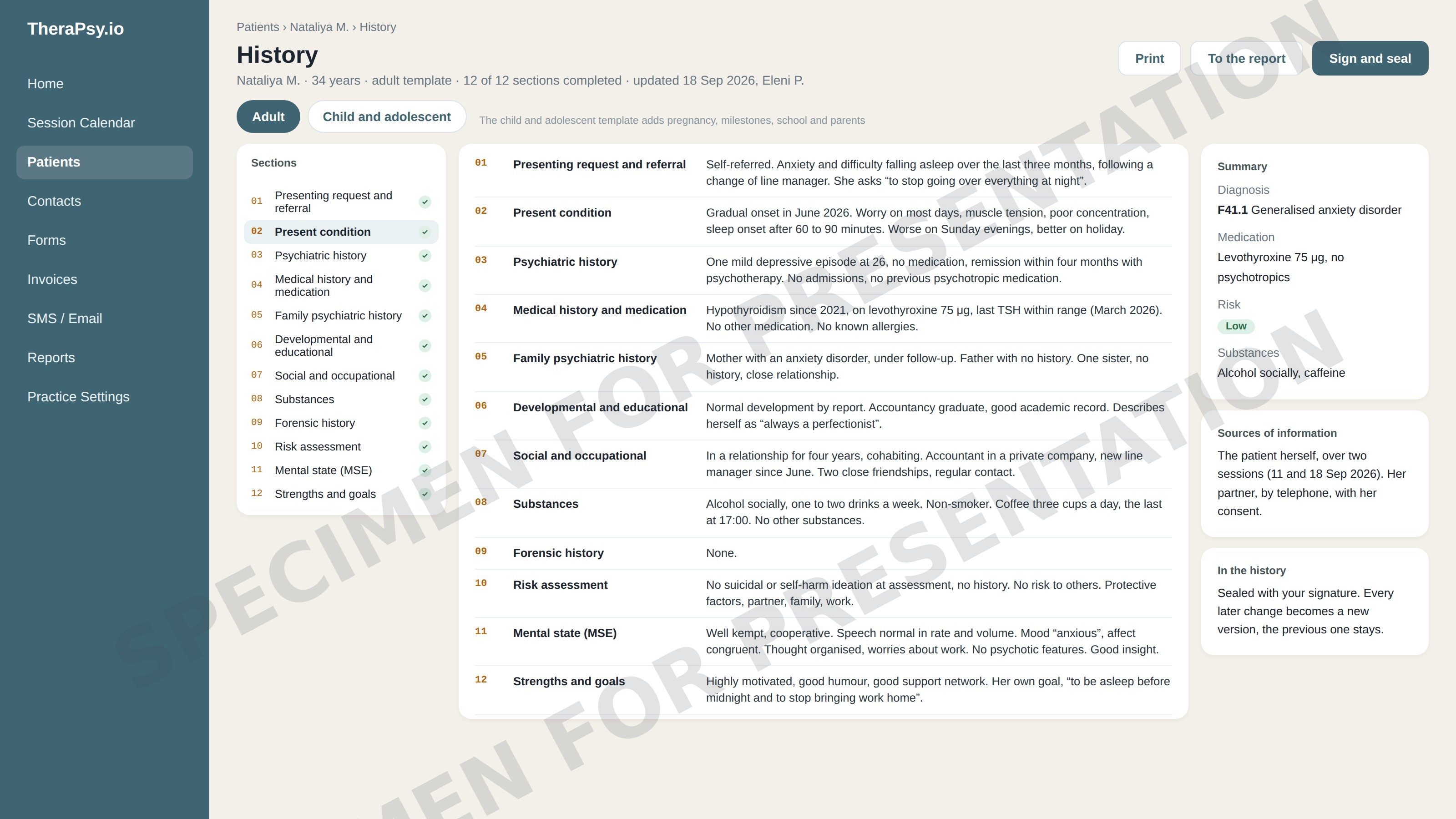
[2] This image is a specimen for the purpose of demonstrating the software. The medicinal products, doses, dosing schedules and clinical parameters shown have been placed solely to demonstrate the application's functionality, concern an invented case and do not constitute an actual prescription, medical advice, a treatment recommendation or the advertising of a medicinal product within the meaning of Directive 2001/83/EC and the Medicinal Products for Human Use Law, Law 70(I)/2001. Prescribing is the sole responsibility of the treating physician, who decides case by case in accordance with scientific knowledge, clinical guidelines and each product's summary of characteristics. TheraPsy.io is clinical-record software and neither provides, checks nor proposes treatment decisions.
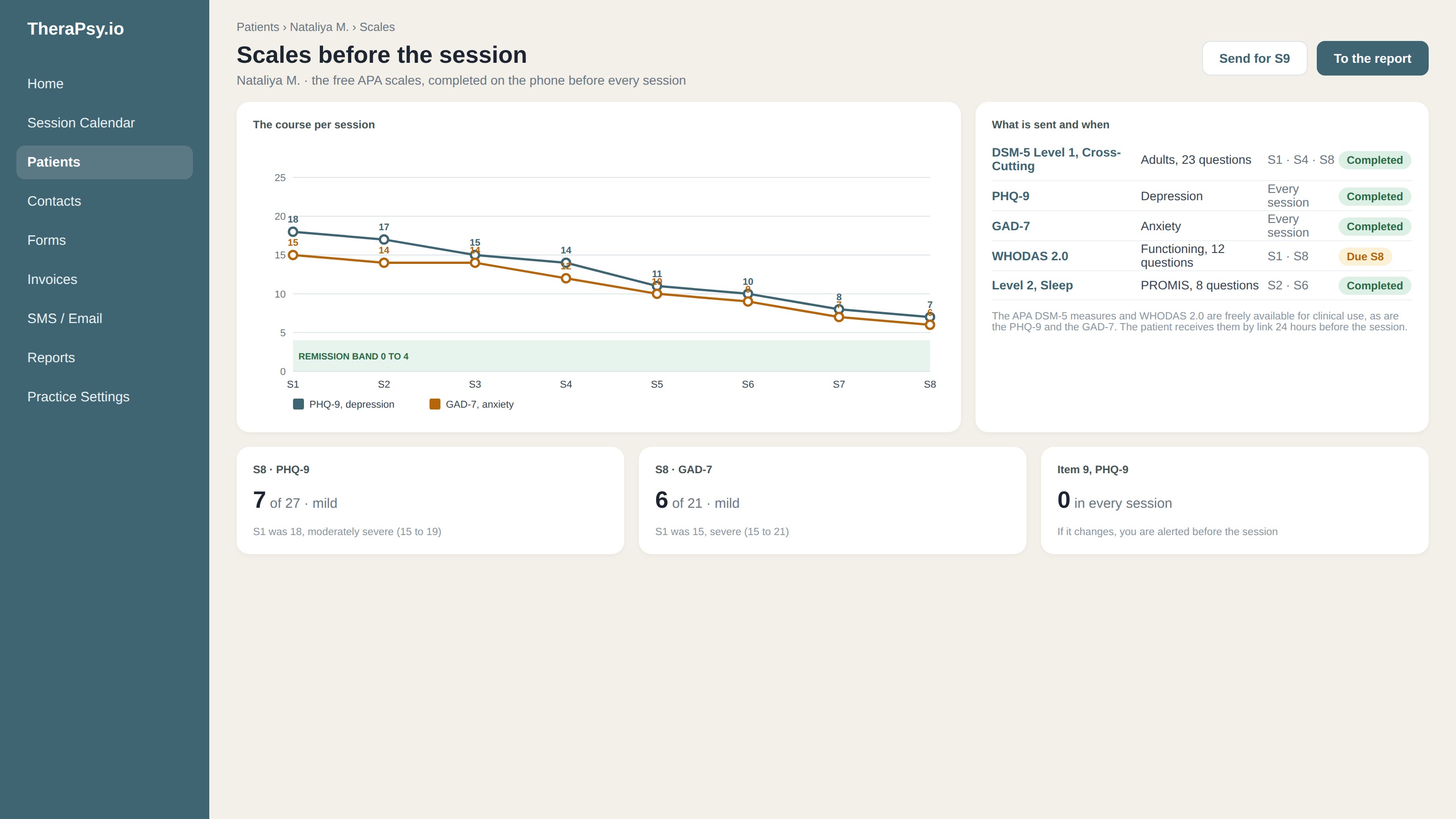
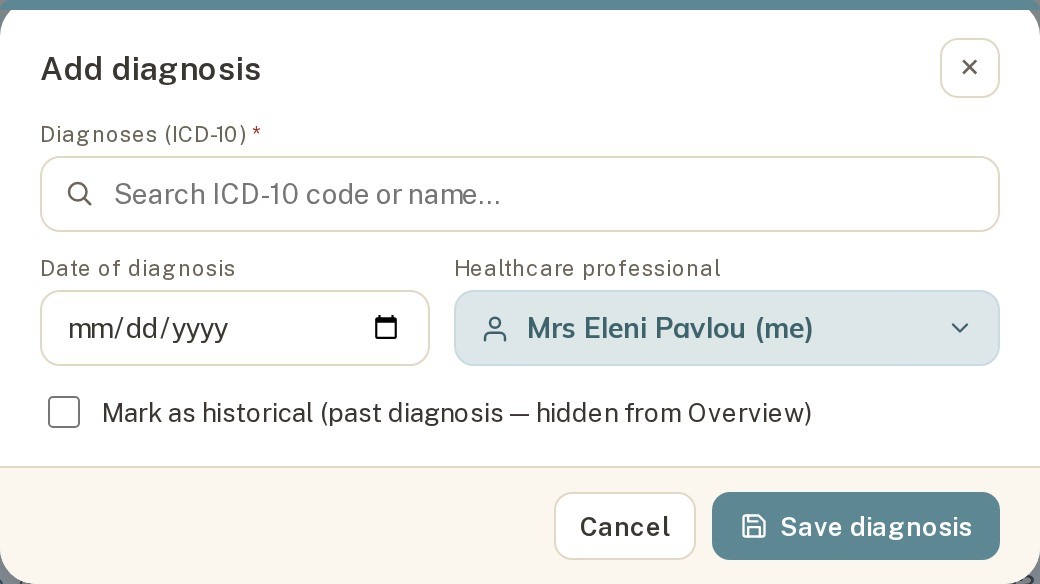
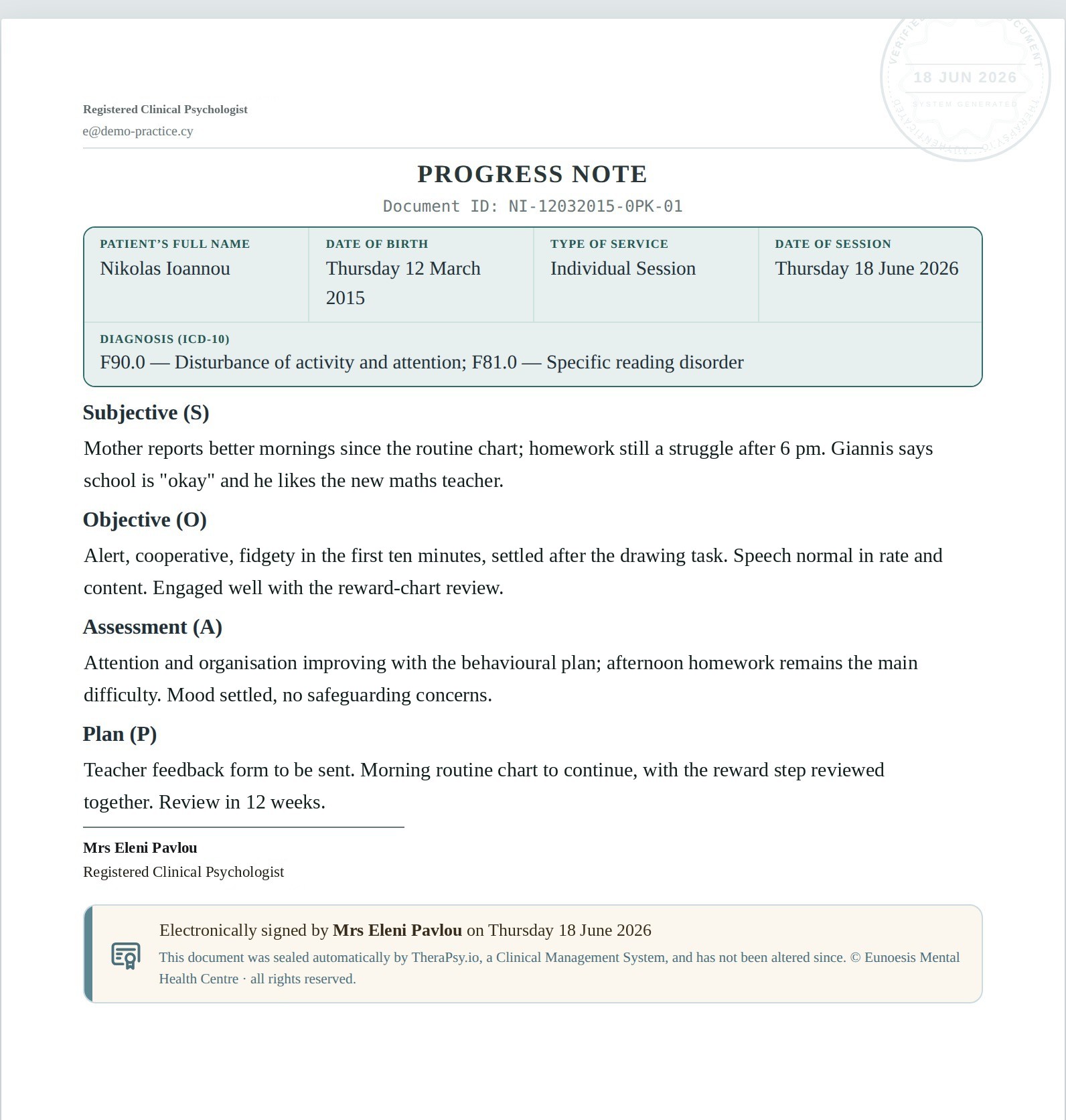
[3] Psychometric instruments and scientific references. This page, in its text or screenshots, refers to the following instruments, classifications and scientific sources, cited in the format prescribed by the American Psychological Association, 7th edition (APA 7):Patient Health Questionnaire-9 (PHQ-9). Kroenke, K., Spitzer, R. L., & Williams, J. B. W. (2001). The PHQ-9: Validity of a brief depression severity measure. Journal of General Internal Medicine, 16(9), 606–613. https://doi.org/10.1046/j.1525-1497.2001.016009606.xGeneralized Anxiety Disorder-7 (GAD-7). Spitzer, R. L., Kroenke, K., Williams, J. B. W., & Löwe, B. (2006). A brief measure for assessing generalized anxiety disorder: The GAD-7. Archives of Internal Medicine, 166(10), 1092–1097. https://doi.org/10.1001/archinte.166.10.1092DSM-5 Level 1 and Level 2 Cross-Cutting Symptom Measures, American Psychiatric Association. American Psychiatric Association. (2013). Diagnostic and statistical manual of mental disorders (5th ed.). https://doi.org/10.1176/appi.books.9780890425596WHO Disability Assessment Schedule 2.0 (WHODAS 2.0), World Health Organization. Üstün, T. B., Chatterji, S., Kostanjsek, N., Rehm, J., Kennedy, C., Epping-Jordan, J., Saxena, S., von Korff, M., & Pull, C. (2010). Developing the World Health Organization Disability Assessment Schedule 2.0. Bulletin of the World Health Organization, 88(11), 815–823. https://doi.org/10.2471/BLT.09.067231Wechsler Intelligence Scale for Children, Fifth Edition (WISC-V). Wechsler, D. (2014). Wechsler Intelligence Scale for Children (5th ed.): Technical and interpretive manual. NCS Pearson.Wechsler Preschool and Primary Scale of Intelligence, Fourth Edition (WPPSI-IV). Wechsler, D. (2012). Wechsler Preschool and Primary Scale of Intelligence (4th ed.): Technical and interpretive manual. NCS Pearson.Wechsler Individual Achievement Test, Fourth Edition (WIAT-4). Wechsler, D. (2020). Wechsler Individual Achievement Test (4th ed.): Technical and interpretive manual. NCS Pearson.International Statistical Classification of Diseases and Related Health Problems, 10th revision (ICD-10), World Health Organization. World Health Organization. (2019). International statistical classification of diseases and related health problems (10th rev.). https://icd.who.int/browse10/2019/enThe instruments above, their names, abbreviations and content are the intellectual property and, where applicable, the registered trade marks of their respective owners, who are not affiliated with TheraPsy.io and neither endorse nor promote it. TheraPsy.io is cloud-based patient-management and clinical-record software. It does not reproduce, distribute or sell the content, items, administration protocols or norms of any instrument. In particular, for instruments distributed under a publisher's licence (WISC-V, WPPSI-IV, WIAT-4), the application neither includes nor scores the instrument. Their names are used solely as descriptive labels for organising records and documents that the clinician creates on their own responsibility, under the licence they themselves hold from the publisher, and the scores are entered by the clinician. Instruments released by their authors for free clinical use are administered and scored according to their published instructions, and the interpretation of results rests solely with the qualified mental-health professional. No value, chart or indicator shown in the screenshots is a clinical finding, diagnosis or recommendation, but an invented example of functionality.
Full legal information. If you wish to read the complete terms of use, the personal data notice, the subscription terms and the disclaimers of TheraPsy.io, you can find them here.